The best roof ventilation systems for homes usually combine ridge vents and soffit vents to keep air moving through the attic. In Portland, where rain and moisture are a big part of life, good roof ventilation helps protect your roof from mold, trapped moisture, and early damage.
Key Takeaways:
|
Add Your Heading Text Here
Best Roof Ventilation Systems for Homes
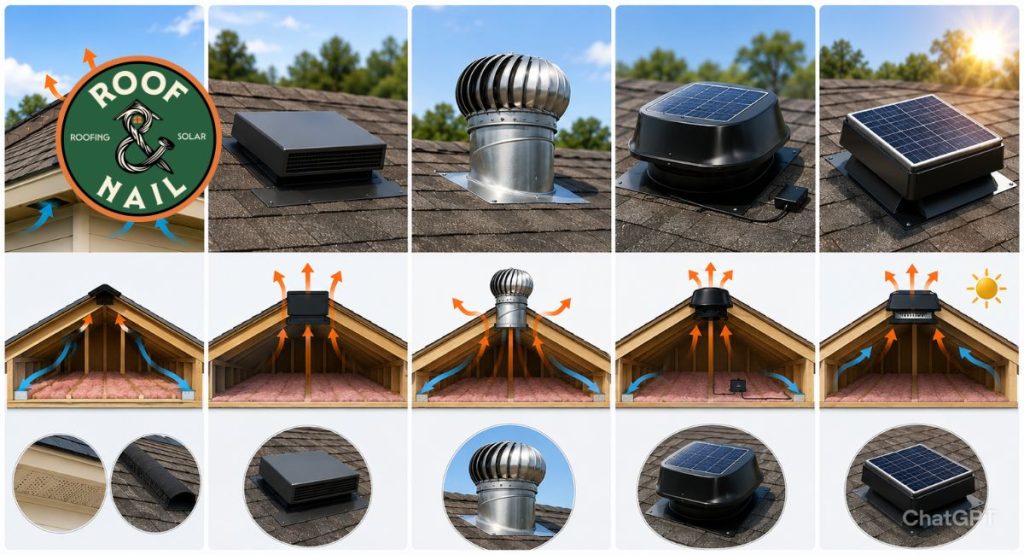
1. Ridge Vents and Soffit Vents
This is probably the most recommended setup for homes in Portland, Oregon. It creates steady airflow through the attic without needing electricity or loud fans.
Here’s how it works:
- Soffit vents pull fresh air into the attic
- Ridge vents let warm, damp air escape through the top of the roof
That constant airflow helps keep the attic dry and balanced.
Why homeowners like this setup
- Quiet and low maintenance
- Helps lower moisture buildup
- Can improve energy efficiency
- Blends nicely into the roof
- Works well year round
This type of roof ventilation installation works especially well for asphalt shingle roofs, which are common throughout Portland neighborhoods.
2. Box Vents
Box vents are those square vents you sometimes see near the top of older roofs.
They let heat and moisture escape naturally from the attic.
Pros
- Affordable option
- Simple design
- No electricity needed
- Easy to replace
Cons
- Doesn’t move air as evenly
- Larger attics may need several vents
- Not as efficient as ridge vent systems
You’ll still see box vents on many older homes around Portland. They can work fine, but many homeowners upgrade when replacing the roof.
3. Turbine Roof Vents
You’ve probably seen these before.
These are the spinning metal vents that turn when the wind blows.
They help pull hot air and moisture out of the attic using wind power.
Benefits:
- No electricity required
- Helps move air quickly
- Fairly affordable
Downsides:
- Can get noisy over time
- Moving parts wear out
- Less effective on calm days
Since Portland weather can be damp and still for long stretches, turbine vents are not always the first choice anymore.
4. Powered Attic Fans
Some homes have attic spaces that hold a lot of heat and moisture. That’s where powered attic fans can help.
These fans actively push hot air out of the attic.
Benefits:
- Strong airflow
- Good for larger attics
- Helps cool down overheated spaces
Drawbacks:
- Higher installation cost
- Needs maintenance
- Uses electricity unless solar powered
For some homeowners, powered fans are worth it if natural airflow alone isn’t enough.
5. Solar Powered Roof Vents
Solar roof vents use sunlight to power attic fans, which means they help ventilation without adding much to your power bill.
Benefits:
- Energy efficient
- Helps reduce attic heat
- Lower operating costs
- Eco friendly option
Things to consider:
- Higher upfront cost
- Depends on sunlight
Even though we get plenty of cloudy weather, solar powered ventilation systems can still work well during warmer months. This is why they’re one of the best roof ventilation systems for homes.
How to Choose the Right Ventilation Systems for Your Home
1. Look at Your Roof Design First
Not every ventilation system works the same for every house.
Things like your:
- Roof shape
- Attic size
- Roof slope
- Existing ventilation
- Roofing material
all affect what system will work best.
A small single-story home in Portland may need a totally different setup than a large two-story home with a steep roof.
2. Think About Portland’s Wet Climate
Portland homes deal with moisture almost year round, so your ventilation system needs to handle damp conditions well.
That’s why balanced systems that bring air in and push air out evenly usually work best here.
Good roof ventilation solutions help prevent condensation before it turns into expensive damage.
3. Check for Warning Signs
Sometimes your house is already telling you there’s a problem.
Watch for signs like:
- Musty smells in the attic
- Mold spots
- Peeling paint
- Hot upstairs rooms
- Condensation near the roof
- Higher utility bills
If any of these sound familiar, it may be time to look into ventilation services in Portland.
4. Don’t Forget About Intake Ventilation
A lot of people focus only on roof vents at the top of the roof, but intake airflow matters too.
If soffit vents are blocked by insulation or debris, air can’t move properly through the attic.
That’s one of the most common ventilation problems we see during roof inspections.
Frequently Asked Questions
What is the best roof ventilation system for homes in Portland?
For most Portland homes, ridge vents combined with soffit vents provide the best airflow and moisture control. They work especially well in Oregon’s damp climate.
Can poor roof ventilation damage my roof?
Yes. Poor ventilation can trap moisture inside the attic, which may lead to mold, wood rot, and early roof failure over time.
How do I know if my attic has ventilation problems?
Common signs include musty smells, wet insulation, hot upstairs rooms, and condensation in the attic. Higher energy bills can also point to poor airflow.
Are solar roof vents worth it in Portland?
They can be. Even with Portland’s cloudy weather, solar roof vents may still help improve attic ventilation during warmer months.
Should roof ventilation be upgraded during roof replacement?
Yes. Roof replacement is usually the best time to improve ventilation because the roofing system is already being worked on.
Call Roof & Nail for Roof Ventilation Solutions in Portland
If your attic feels damp, your upstairs gets too hot, or you’ve noticed signs of moisture damage, your roof ventilation could be the issue.
At Roof & Nail, we help homeowners choose the best roof ventilation systems for homes and make sure everything is installed the right way. Whether you need roof ventilation installation, attic airflow improvements, or a full roof replacement, our team is here to help.
Get in touch with us today to get your free inspection and estimate.